
Itinerary & Logistics for an Eight-Day Montana Road Trip
Montana is one of my favorite states and is very popular for outdoor lovers. I spent eight incredible days in Montana in August 2025. While you can see a lot in eight days, you most likely can’t see the whole state – it’s huge!
Itinerary
I’ve included our general itinerary for the eight-day Montana road trip below. You can read my individual blog posts on the separate areas for much more detail and lots of photos!
Day 1
Fly to Missoula
Plan to get to Missoula in the evening and check into your lodging in town for the night.
Day 2
Drive to Bozeman
Have some breakfast at your hotel in Missoula and then drive three hours to Bozeman.
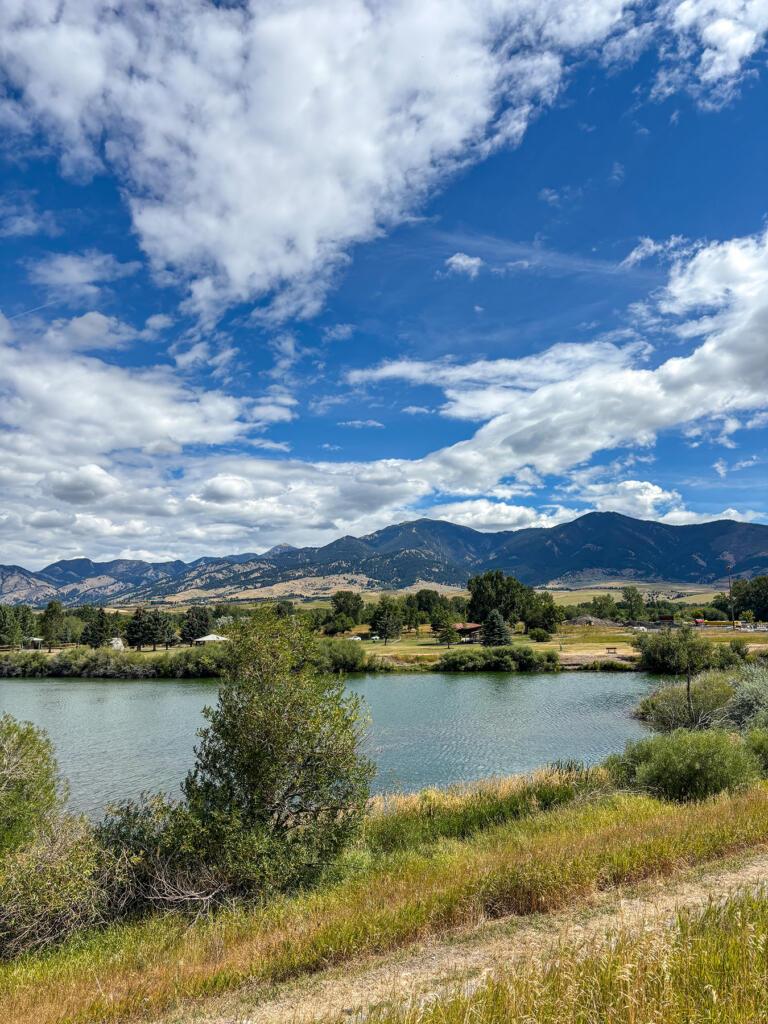
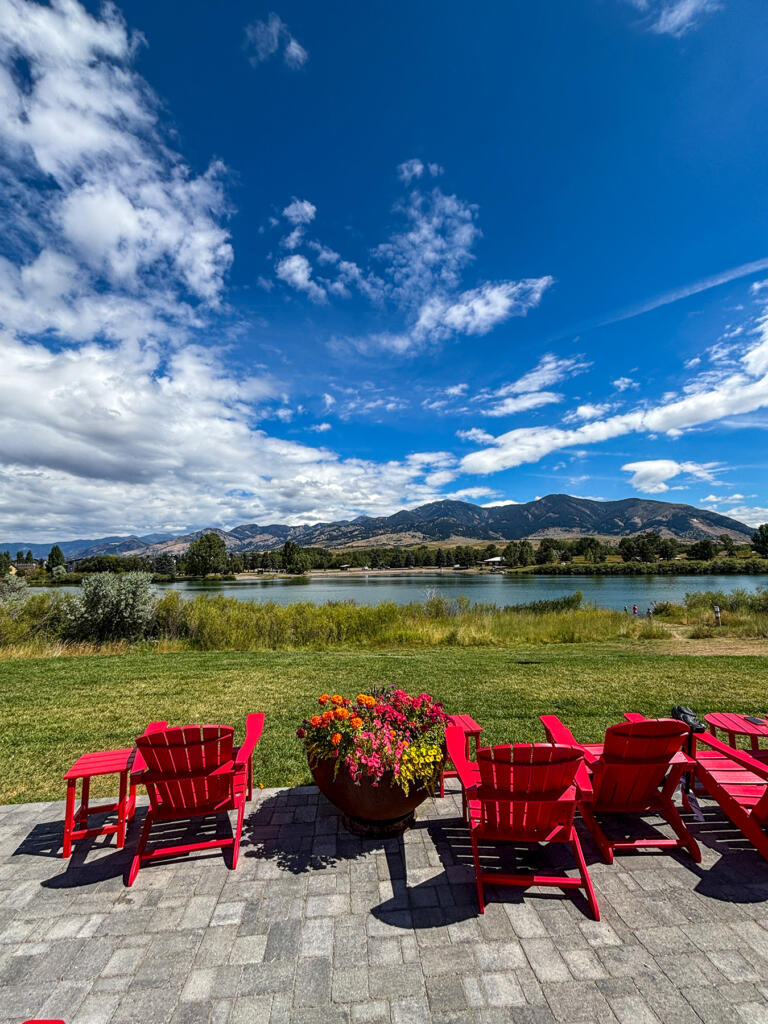
Lunch and drinks at MAP Brewing
Sit on their beautiful patio and get some delicious food and beer.
Drive to Yellowstone
Drive about 1.5 hours toward the park to the town of Gardiner.
Whitewater Rafting
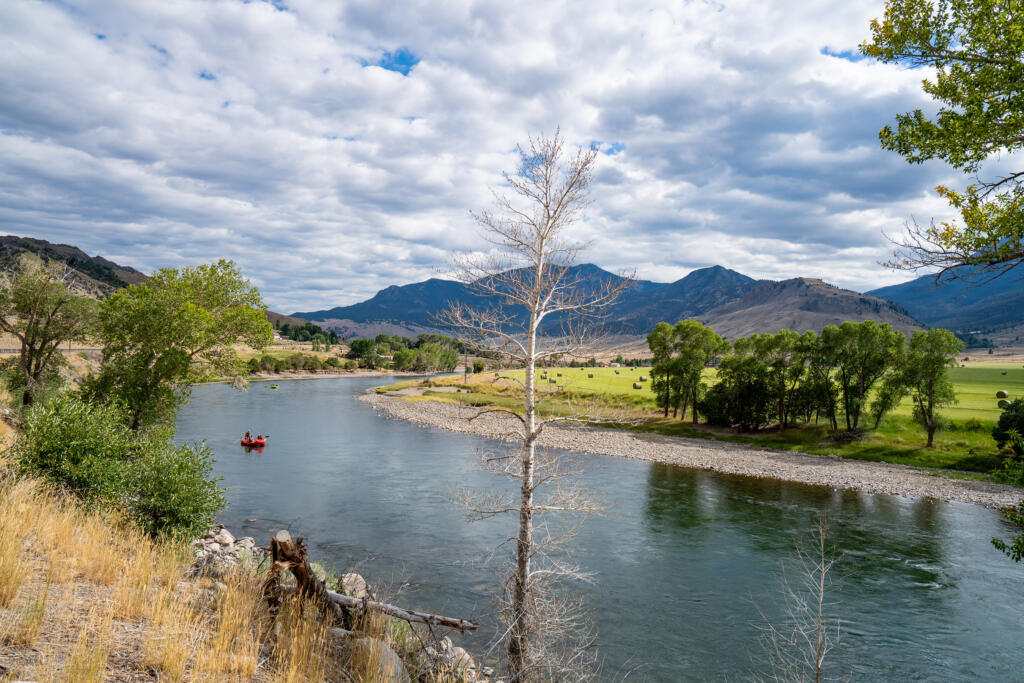
The main activity of the day will be a whitewater rafting trip with Wild West Rafting. Book the 3:30pm two-hour trip ahead of time and arrive around 3pm to check in and change into swimsuits. The office has a beautiful view of the river, as well as restrooms and changing rooms.
The guides will give you the spiel on how to paddle and work safely as a team. They’ll load you onto the raft and the journey down the Yellowstone River will begin! Floated through town and then along the border of the park, just outside of the park boundaries. You’ll paddle eight miles, which takes about 2.5 hours. The entire trip has gorgeous scenery. You’ll go over several smaller rapids, but nothing intense. This is a great option for beginners or families.
Stay in Emigrant
Check into your lodging for the next couple of nights. We stayed at this VRBO 30 minutes north, called Little Lodge at Emigrant Peak.
Day 3
Yellowstone National Park
The entire next day will be spent in Yellowstone National Park. Leave early to try and make it to the park by sunrise. This will help ensure you make the most out of the time in the park, avoid long entrance queues that tend to happen mid-morning, and increase your chances of seeing wildlife.
Lamar Valley
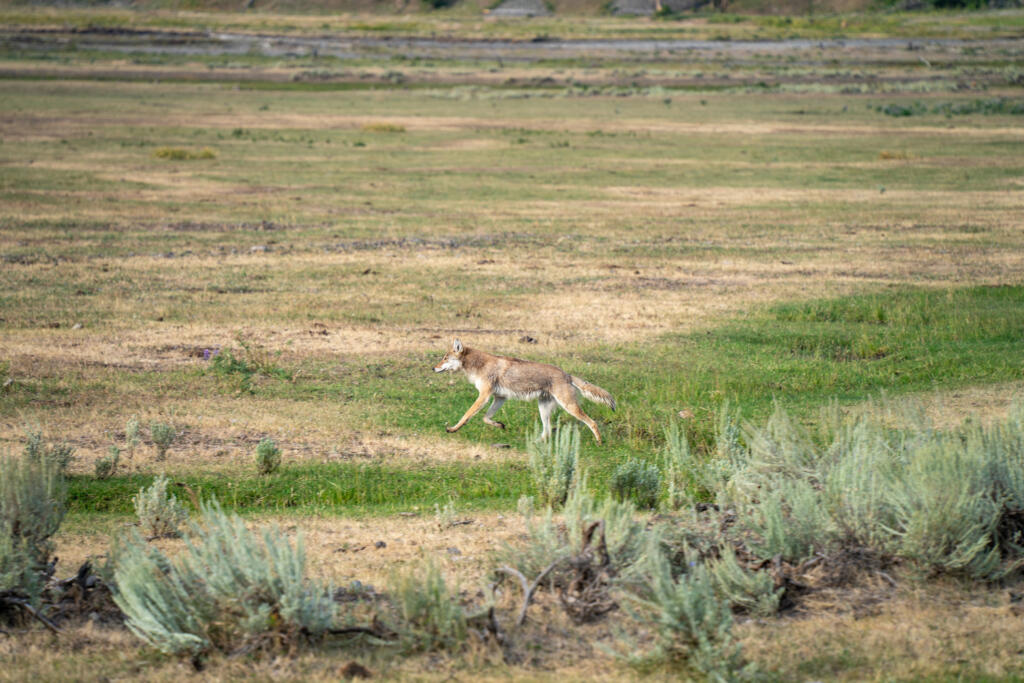
Lamar Valley is sometimes called the Serengeti of North America because of its incredible wildlife viewing. The valley is far from the rest of the park’s highlights, so you will have to go a little out of your way to get there. The Valley starts around the Tower Roosevelt Junction. We saw Pronghorn sheep immediately, followed by tons of Bison and even a few coyotes! If you can’t visit Lamar Valley around dawn or dusk, you will almost definitely still see tons of bison, but your chances of seeing the more elusive animals decrease.
Grand Canyon of the Yellowstone
Next, drive about one hour south to the Grand Canyon of the Yellowstone. Park at the North Rim parking lot and do the short hike down to the Brink of the Lower Falls, which is steep but mostly paved. The viewpoint was great – you stand near the top of the falls, looking down at it and the canyon. Very pretty!
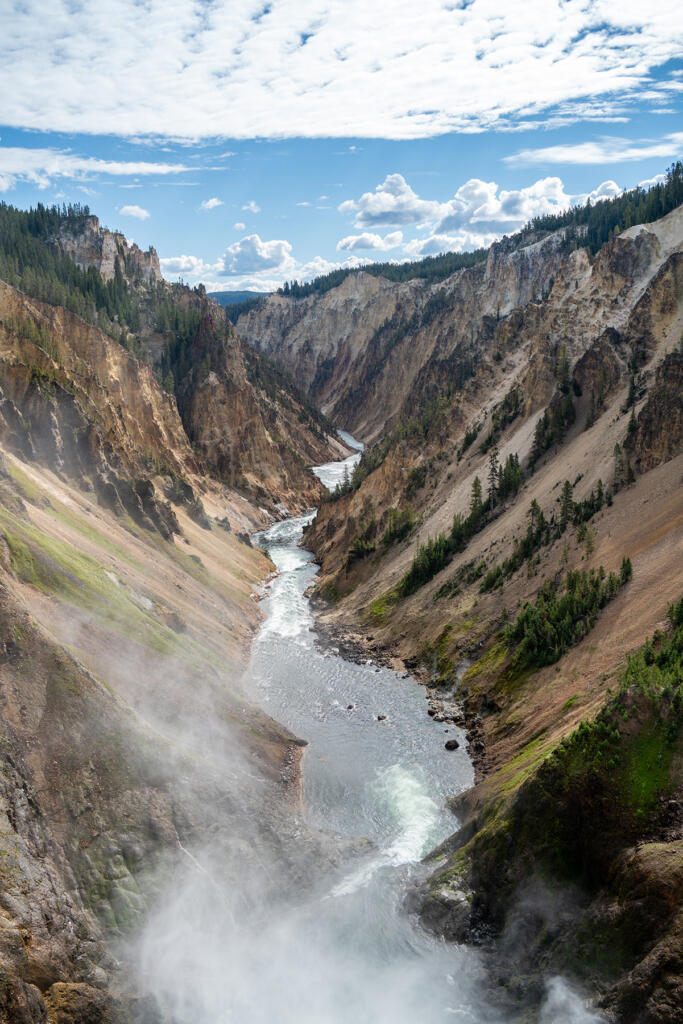
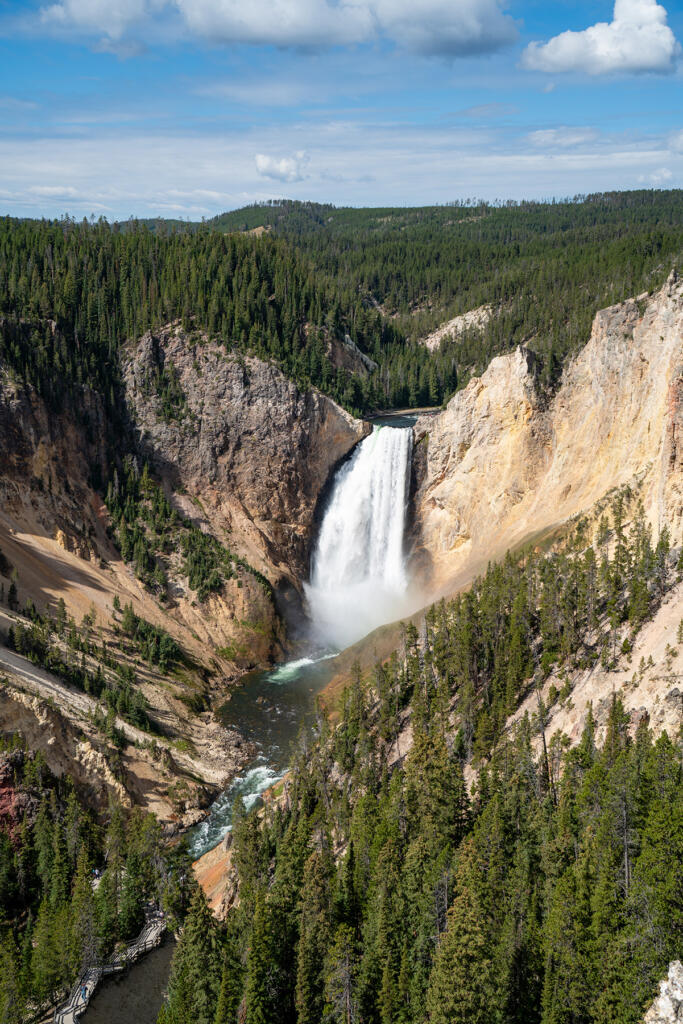
From there, drive down to the next parking lot to see the view from Lookout Point, which looks back at the waterfall we were just standing above. This viewpoint doesn’t require a hike, just a short walk from your car.
Yellowstone Lake
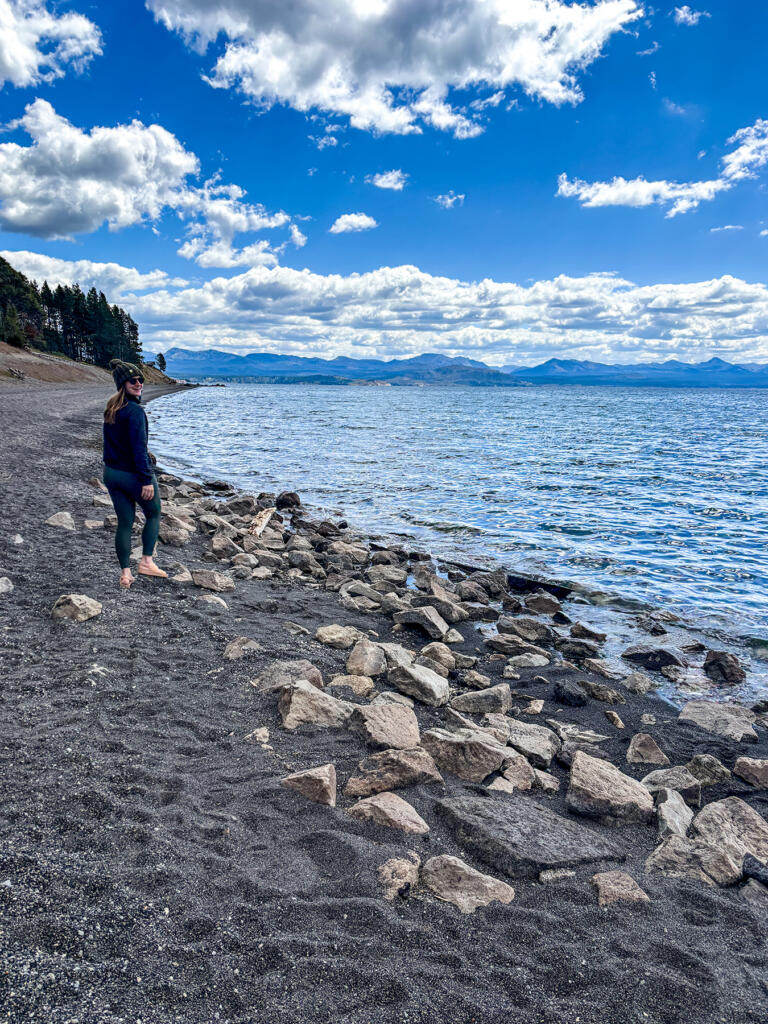
Drive another 30 minutes south to Yellowstone Lake, the largest and highest altitude lake in North America. You’ll drive through Hayden Valley, which is another area famous for its wildlife. This would be another great area to spend dawn or dusk if you can’t make it to Lamar Valley. Stop at the picnic area near Lake General Store to eat a packed lunch with a beautiful background view.
Old Faithful
Driving for one more hour will bring you to Old Faithful, one of the most popular parts of the park. Accurately named, the geyser erupts on a consistent schedule, about every 90 minutes on average. You can plan around it and almost guarantee seeing an eruption while you’re here. The National Park Service app shows the next predicted eruption time, so you’ll know when to plan your stop (if you have service!).
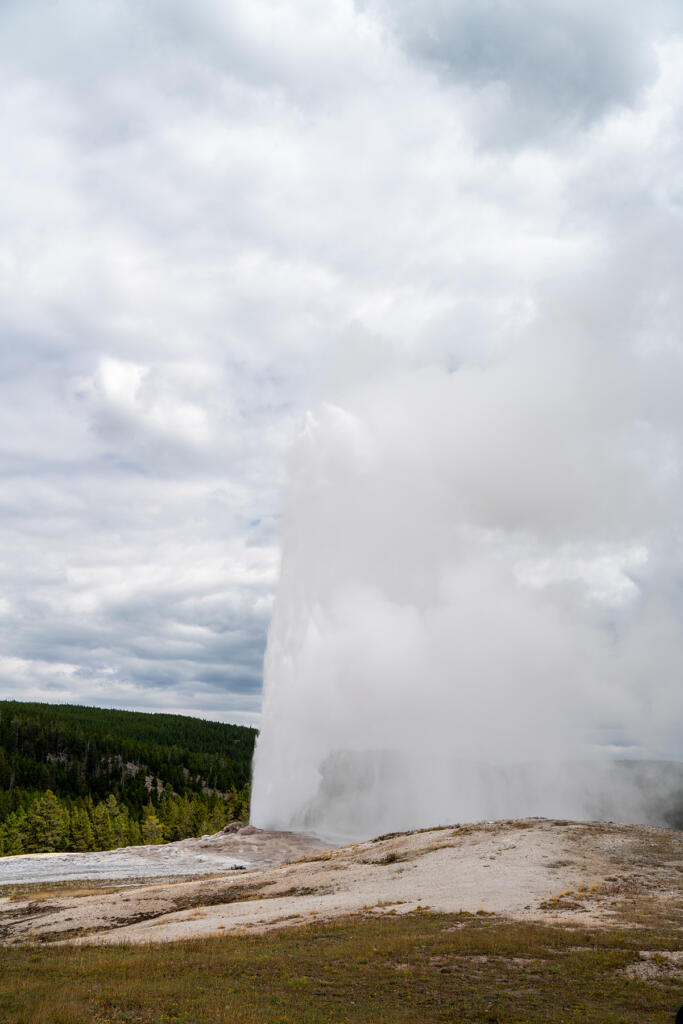
This area is also a good spot to get a meal or snacks if you’re hungry. The Old Faithful Visitor Education Center is located near the geyser as well. Here, you can talk to rangers, learn more about the park, and get your national park passport stamped.
Grand Prismatic Spring
Grand Prismatic Spring is only a few minutes up the road from Old Faithful. This is the largest hot spring in the United States and third largest in the world. It is one of the most photographed features in Yellowstone. Its vivid colors really make it special! The park has a boardwalk that allows visitors to see it up close. There are no railings, so be sure to keep an eye on little ones. Falling off the boardwalk can be very dangerous!
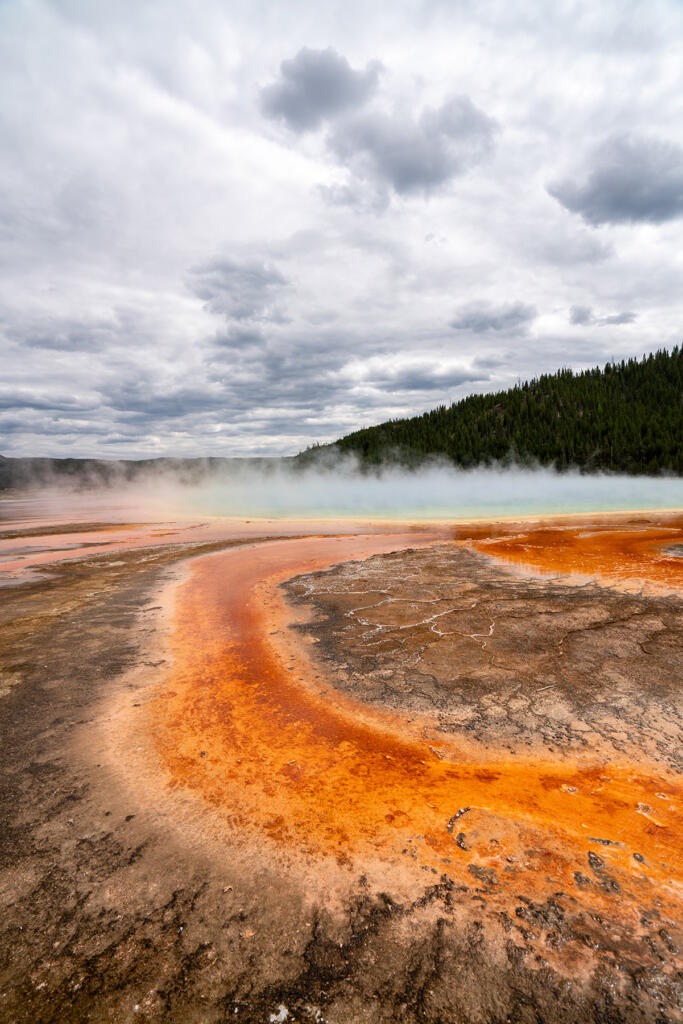
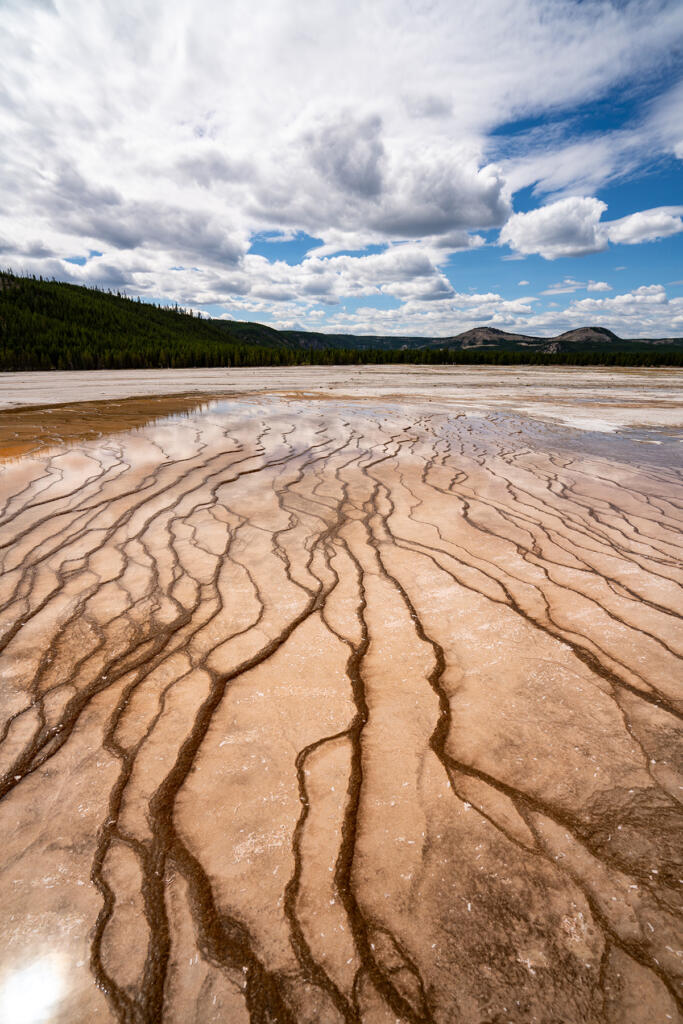
Head back to your lodging for the night. You’ll most likely be tired after this long day!
Day 4
Drive to Glacier
You’ll have a long, six-hour drive from Yellowstone to Glacier National Park the next morning. Get going on the early side so you have some time to explore Glacier in the afternoon.
Two Medicine Lake
Arrive at Two Medicine Lake around 2pm and head to the General Store. They have a little cafe with really good food and lots of souvenirs to choose from.
Take a boat tour of Two Medicine Lake at 3pm. Make sure to book this ahead of time. The boats run the length of the lake and drop you off at the other side if you want to explore the hiking trails. The boat ride is really beautiful, and we even saw grizzlies swimming near the shore of the lake!
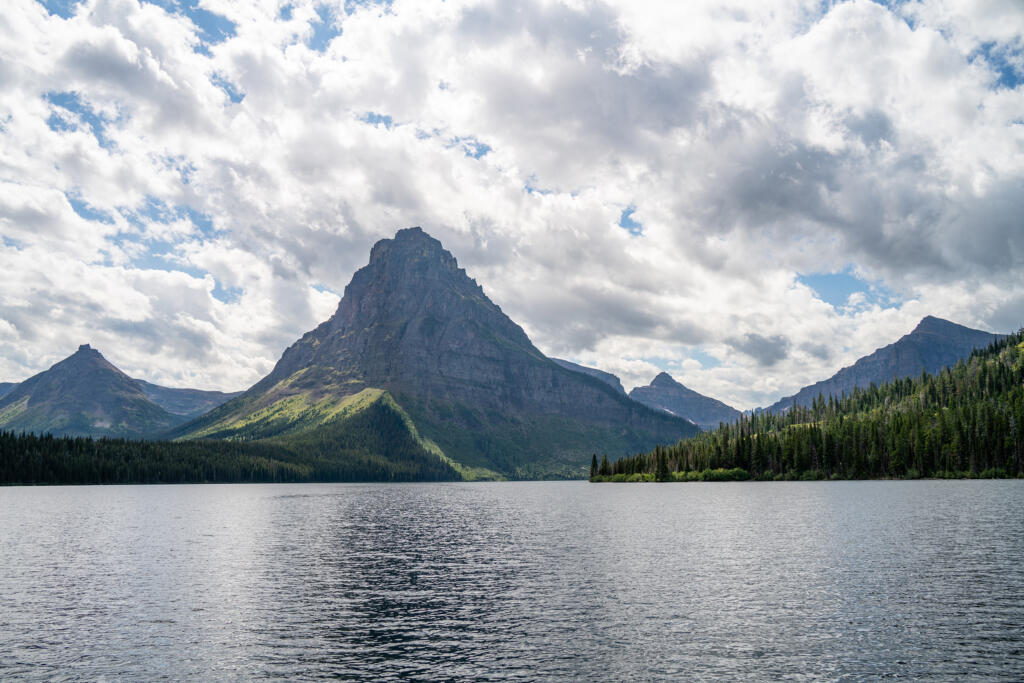
If you choose to hike at the other end of the lake, complete the 2.2 mile round trip journey to Twin Falls.
Stay in East Glacier
Head back to East Glacier Park, where you’ll be staying for the night. Grab some dinner here. I highly recommend the Mexican joining Serrano’s.
Day 5
Glacier National Park
You’ll be crossing Glacier National Park today via the popular Going-to-the-Sun-Road, which goes from east to west. Start with a scenic stop of Wild Goose Overlook, which was featured in the opening scene of The Shining.
Sun Point Nature Trail
The quick hike along the Sun Point Nature Trail takes you to a beautiful spot overlooking St. Mary Lake. It’s only about 0.3 miles round trip, but I do recommend at least sneakers, because the terrain is uneven in parts. The view to effort ratio is very high with this one!
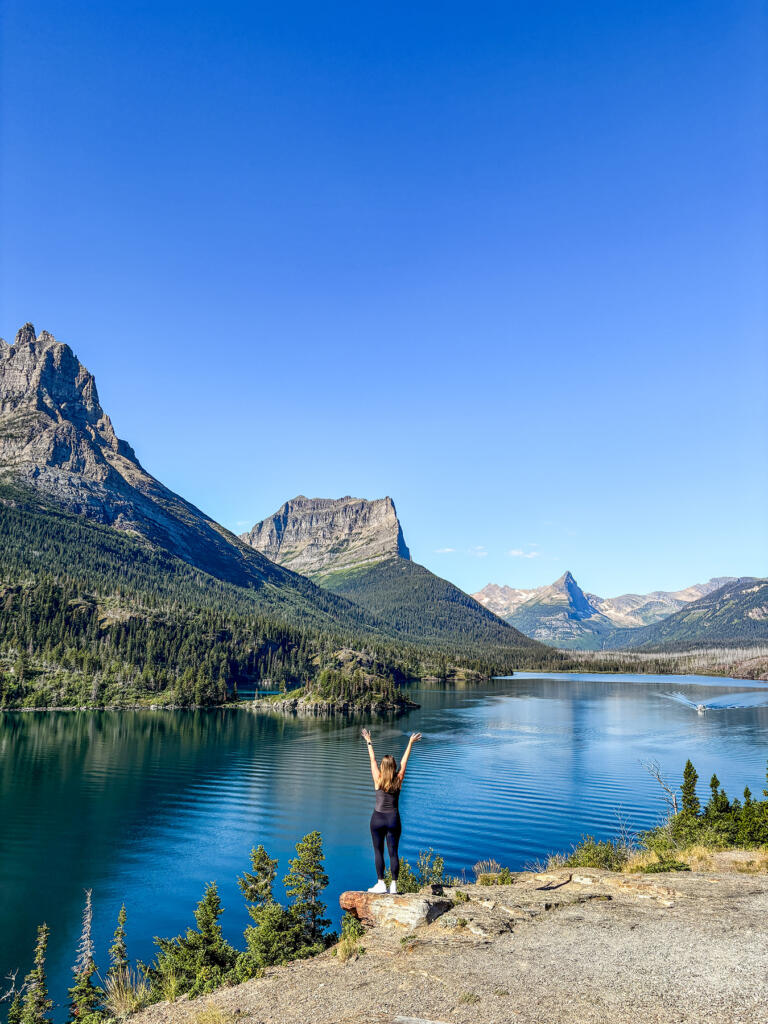
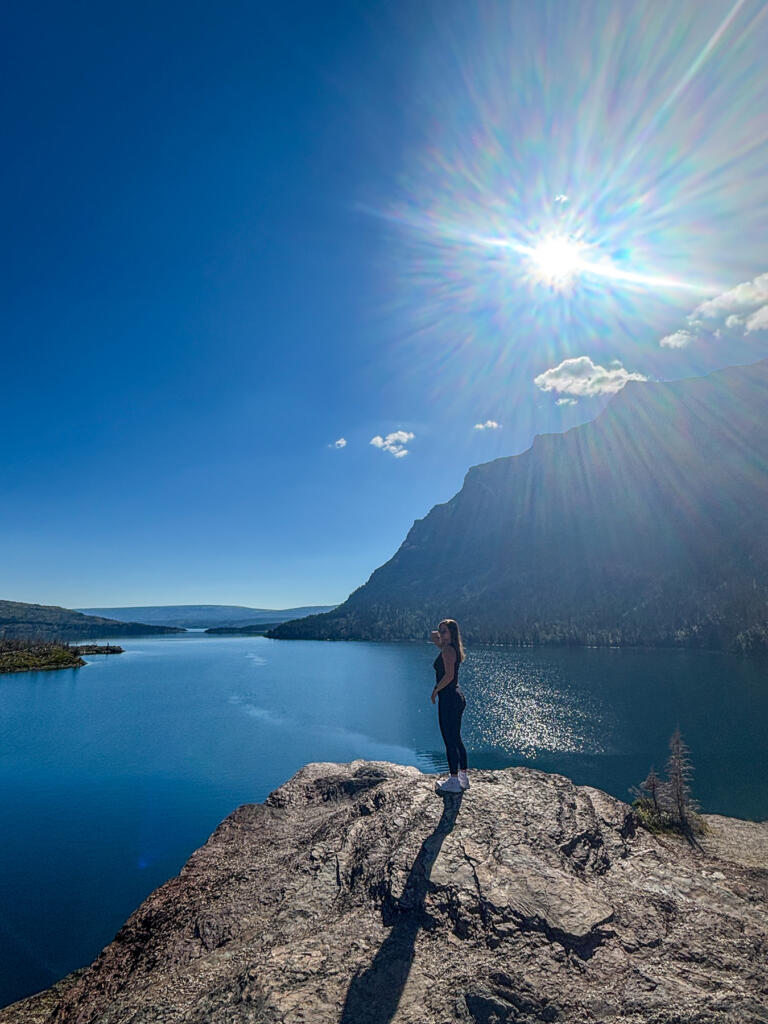
Going-to-the-Sun-Road
Drive from the east side of the park to the west side via Going-to-the-Sun Road. This road is one of the most scenic in the country and climbs over the Continental Divide at Logan Pass. Since the crowds were starting to accumulate and the lighting was harsh mid-day, we decided to drive straight through to the west side of the park and return to Logan Pass that evening for sunset.
Lake McDonald
Lake McDonald is the largest lake in the park and is near the west entrance. It’s known for its rainbow-colored stones on the bottom that you can see through the clear water. There are lots of activities you can do here, including swimming, kayaking, boat tours, motorboat rentals, and walks around the shoreline.
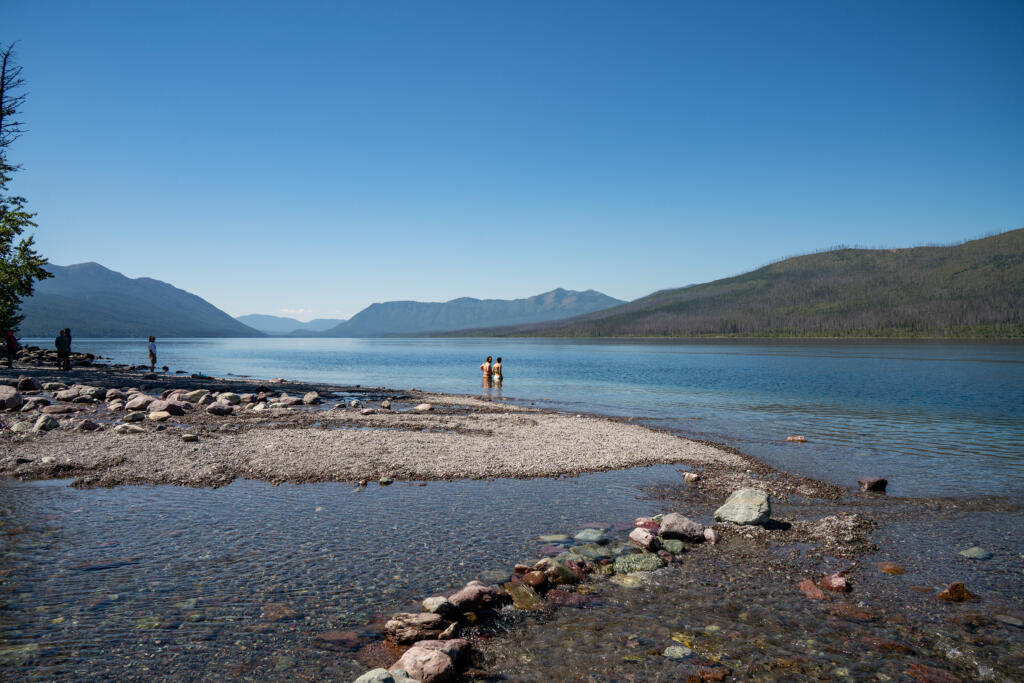
Check into Lodging
Go ahead and check into your lodging for the next two nights on the west side of the park. We stayed at an Airbnb in Columbia Falls. Drop your things, grab some groceries, make a quick early dinner, and head back to the park. Note that a timed entry ticket is required to enter from the west entrance between 7am and 3pm. Plan to re-enter the park after 3pm.
Paradise Meadow
This is one of the most beautiful roadside stops with very little effort to get amazing photos.
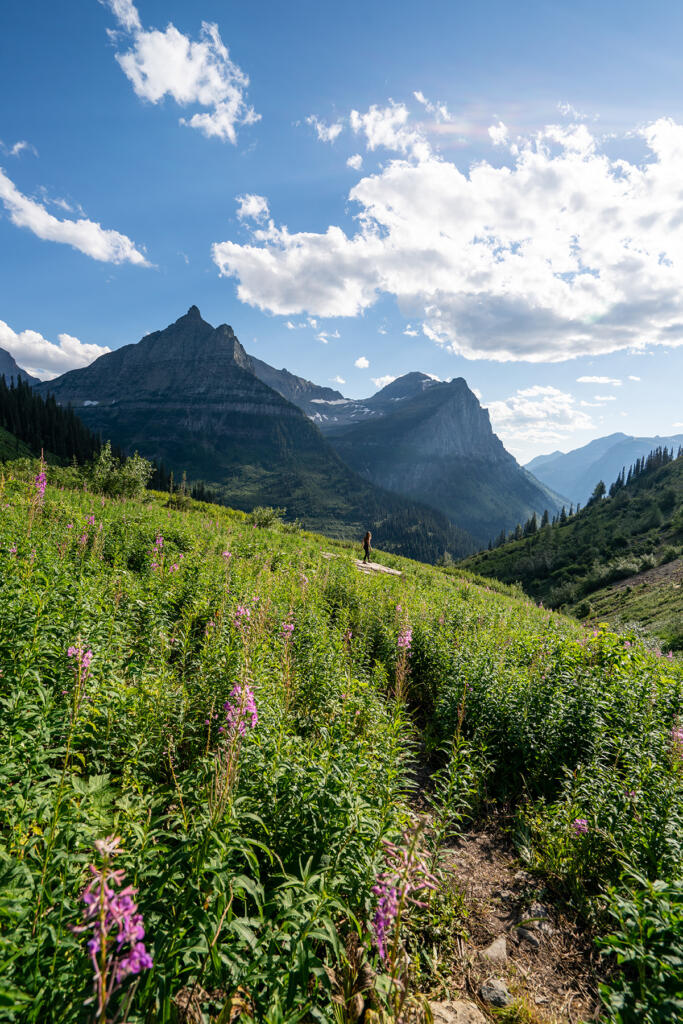
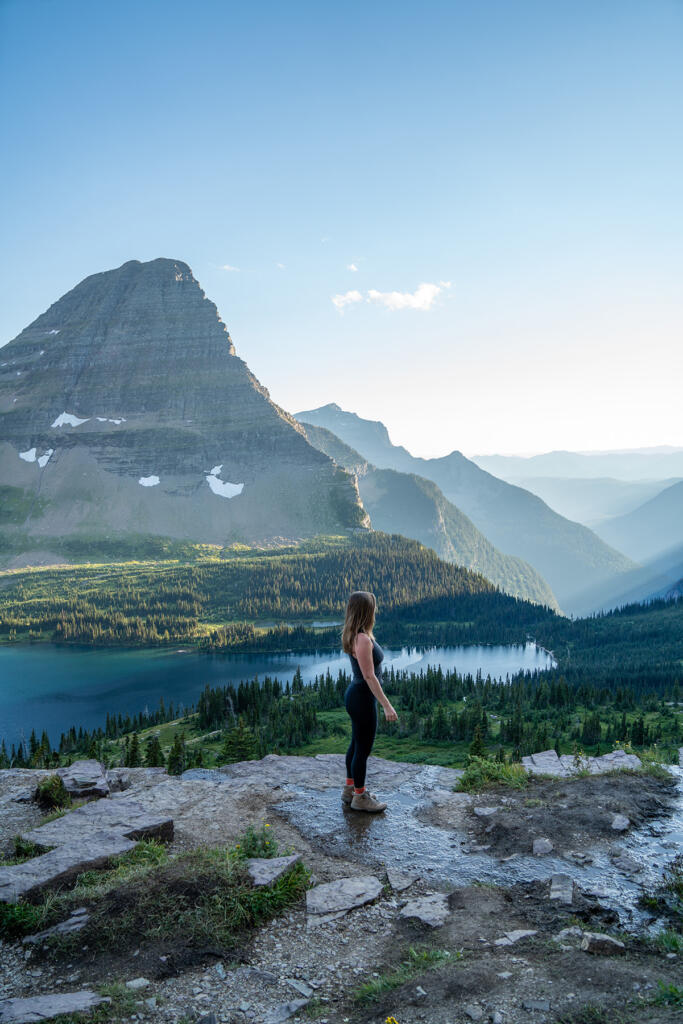
Hike Hidden Lake at sunset
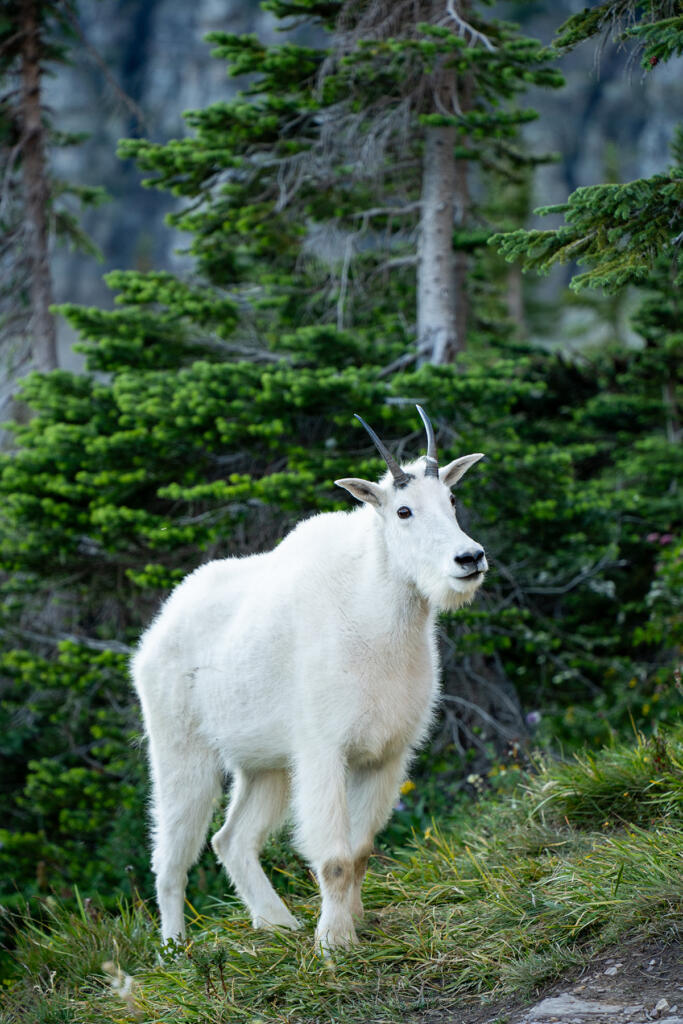
The hike to Hidden Lake Overlook starts at Logan Pass. I recommend starting this hike about 2.5 hours before sunset. This should be the perfect amount of time to complete the hike and have plenty of time for viewing wildlife and taking all the pictures you want.
Day 6
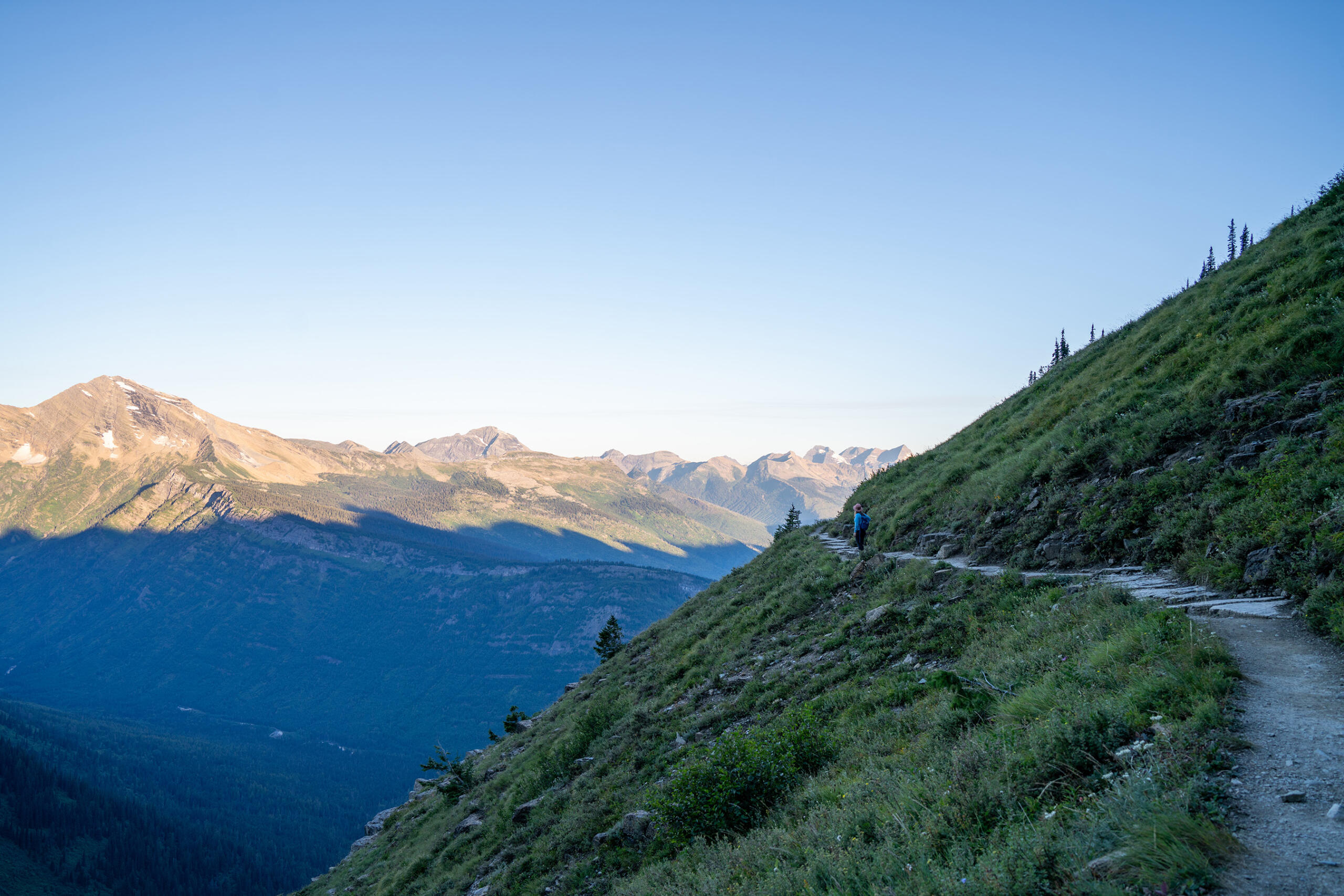
Hike Highline Trail
There are several route options for hiking the Highline Trail. Most hikers will start at Logan Pass (as opposed to the Loop trailhead), as the trail is more downhill in this direction. If you want to complete the full hike, you can hike from Logan Pass to the Loop and catch a park shuttle to bring you back to your car. Or you can hike to the Granite Park Chalet (which is most of the way, and the end of the good views) and then turn around and hike back to Logan Pass.
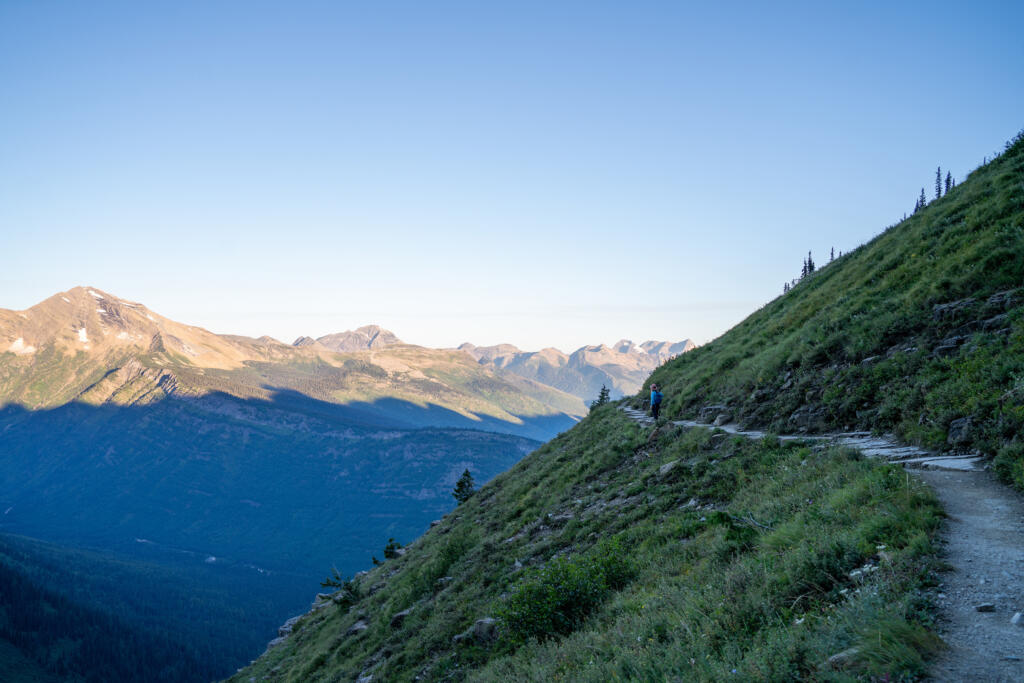
The good thing about this trail is that the views are incredible the entire way, so you can turn around at any point.
Explore Whitefish
After you get done with the Highline Trail, you can explore the nearby town of Whitefish. There are plenty of shops to explore and you could also get dinner or drinks here.
Day 7
Drive to Missoula
If you’re staying on the west side of Glacier, you’ll have about a 2.5 hour drive south to Missoula. Start early so you can spend about half the day rafting.
Rafting
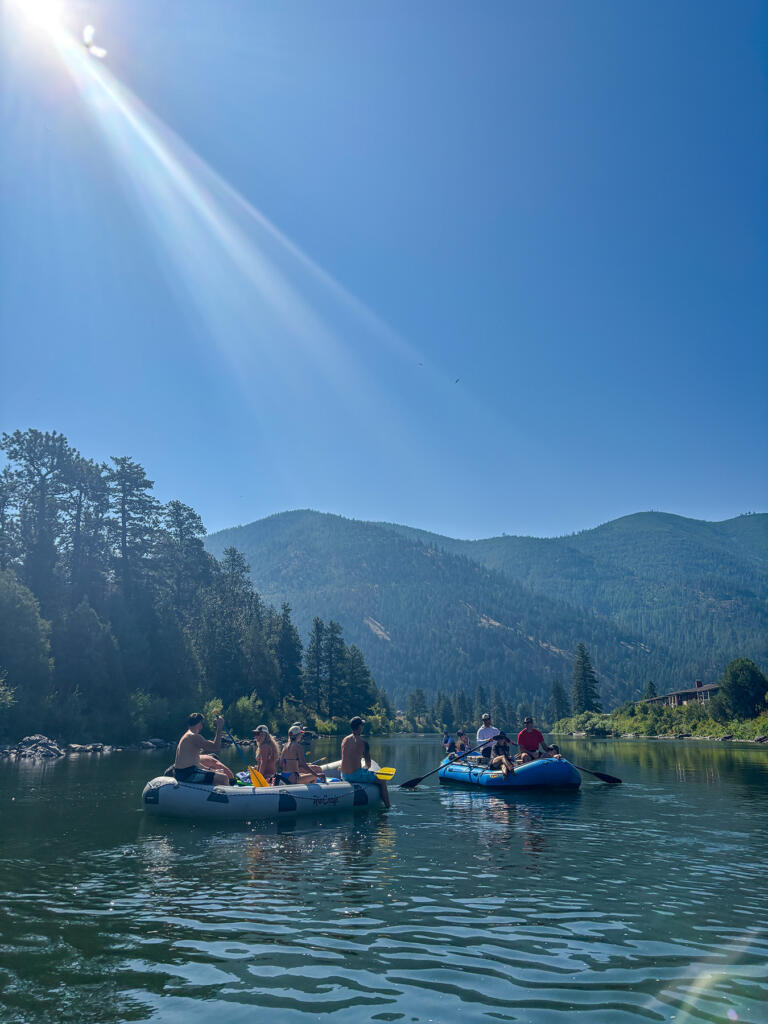
Missoula is a popular area to go rafting or kayaking. You can choose an adventure-filled whitewater trip a little south of Missoula, or a leisurely river float through town. The Alberton Gorge is known for its long scenic runs with numerous Class II and III rapids, which are perfect for whitewater rafting. There are also milder whitewater trips along the Blackfoot River, which would be better for families or those wanting a gentler experience. You can also do a scenic float trip down the Clark Fork River if you do not want to encounter big rapids.
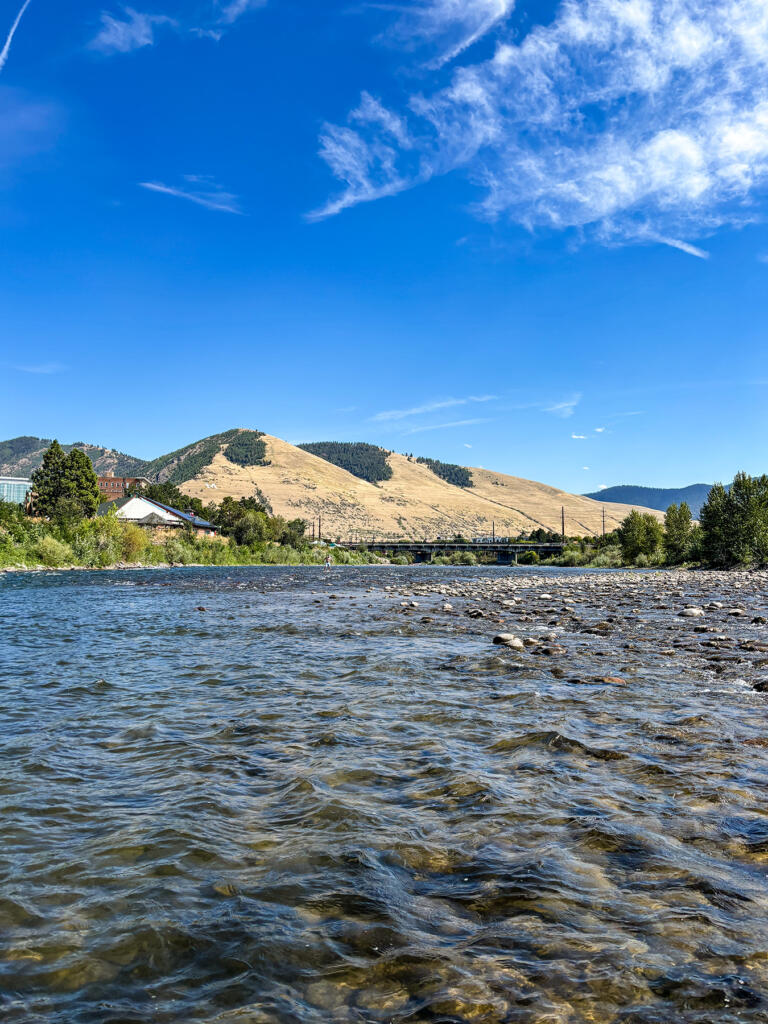
Stay in Missoula for the next two nights.
Day 8
Horseback Riding
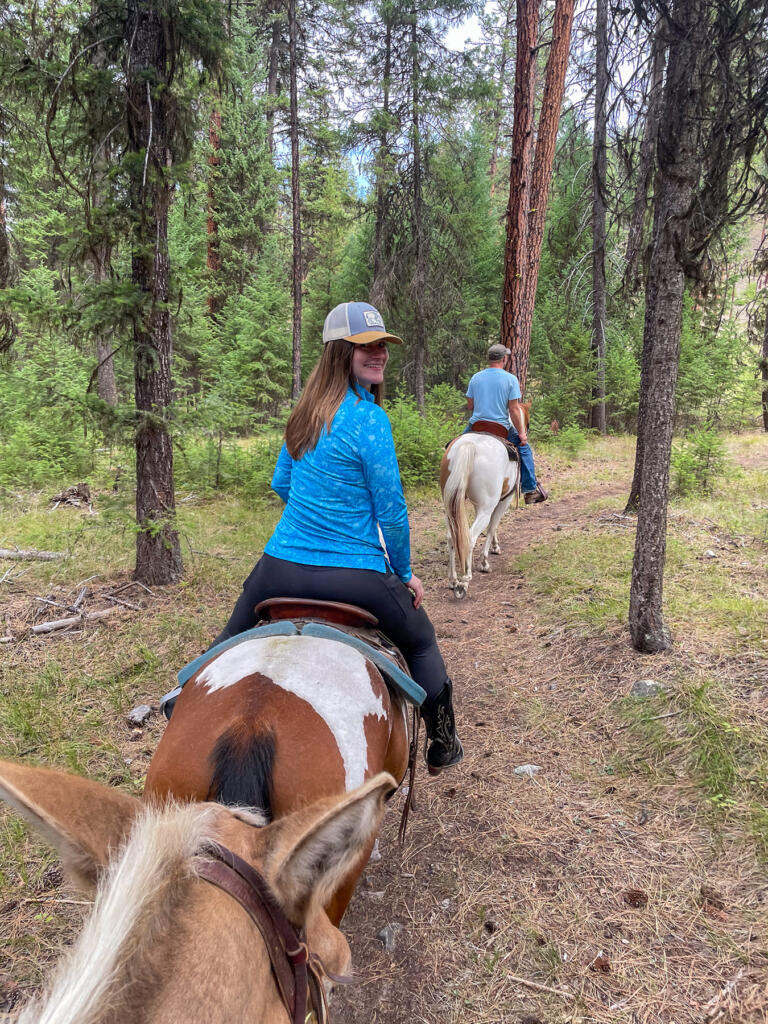
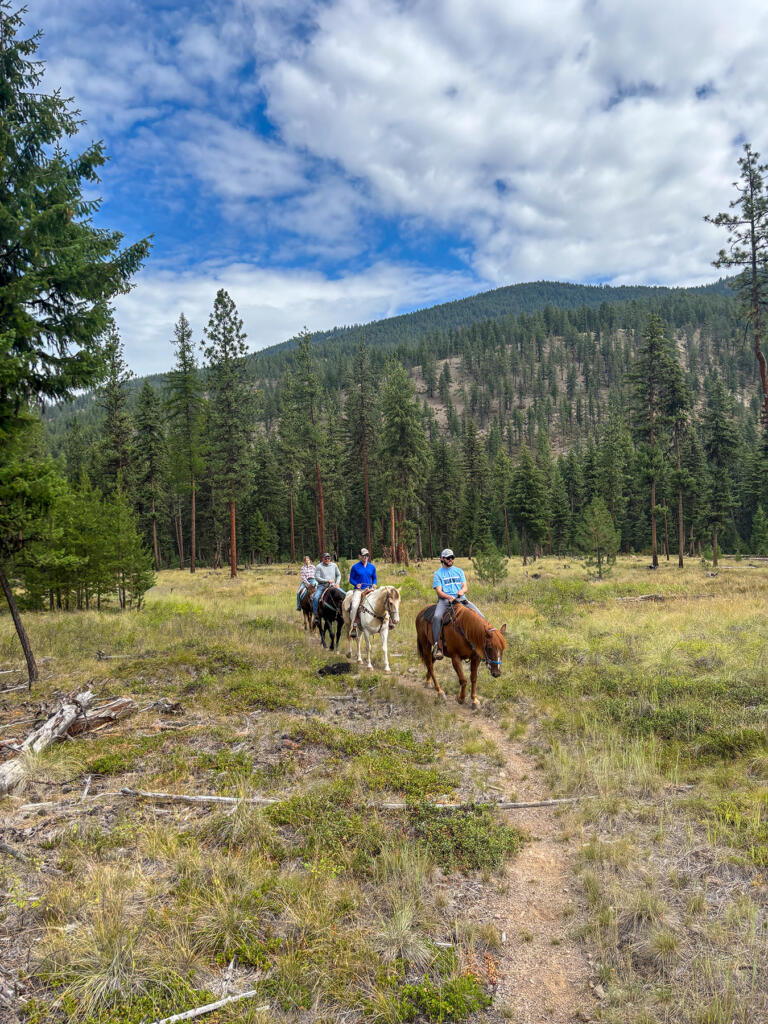
I recommend going for a horseback ride with Hood’s Western Adventures the next morning. This is a family-owned company that specializes in horseback riding experiences. Book in advance and choose between the one or two hour trail ride. We did the two hour ride and loved it!
FSK for Brunch
Next, I recommend having brunch at FSK. It’s located across the street from the airport, and on the way back from the ranch as you’re coming into Missoula. This may have been our favorite meal of the trip! Get the B&G (biscuits and gravy) and the bulgogi toast.
Missoula
Check out downtown Missoula and explore the shops. Get some ice cream at Sweet Peaks!
Day 9
Fly home
You’ll fly home on your last day. There aren’t a ton of direct flights from Missoula, so we had a layover in Minneapolis on our way to Atlanta.
Costs Per Person (in 2025 USD)
Our costs per person for our eight-day Montana road trip are listed below. Note that we were traveling in a group of four, so if you were going alone, certain costs would be higher.
Domestic flights: $645
Rental car: $150
Gas & parking: $80
Lodging: $1,085
Food: $315
Activities: $310
TOTAL: $2,585
Tips & Notes
Glacier National Park Timed Entry Reservations
To help with heavy congestion along this popular road, the Glacier National Park Service has a timed entry from mid-June through mid-September. Vehicles entering the park from the west side between 7am and 3pm must have a timed entry vehicle reservation. If you do not have a reservation, make sure to enter before 7am or after 3pm, which is doable for these hikes!
Avoid mid-day activities in the national parks
I highly recommend planning popular activities early in the morning or near sunset. During the middle of the day, lots more people are out and the park gets crowded. Wildlife is also much more active around sunrise and sunset.
Book lodging early
Montana lodging fills up quickly in peak seasons, especially near the national parks. We booked our lodging in January for our August trip.
Be ready for all kinds of weather
Pack layers! Mountain weather can change fast. Expect chilly mornings and evenings, even in the summer.
Respect the wildlife
Remember to stay at least 25 yards away from all wildlife and 100 yards from bears and wolves. Bison really look cute and cuddly, but they are very defensive and can do some serious damage!!
You may also be interested in:
Discover more from Young Wayfarer
Subscribe to get the latest posts sent to your email.
Rob
What a cool trip. And some great advice.